A Name Rooted in Two Traditions
The origin of Labro's name is not settled. One theory connects it to the Latin word lavabrum, meaning "basin," a reading generally considered more likely. Another traces it to aper or aprum, the Latin for wild boar. Both possibilities are preserved in local tradition, and the uncertainty itself is part of the village's story.
The town's coat of arms reflects the boar tradition directly: it depicts a wild boar standing beneath an oak tree, a heraldic image tied to one of the two etymological theories.
A Village Between Valley and Peak
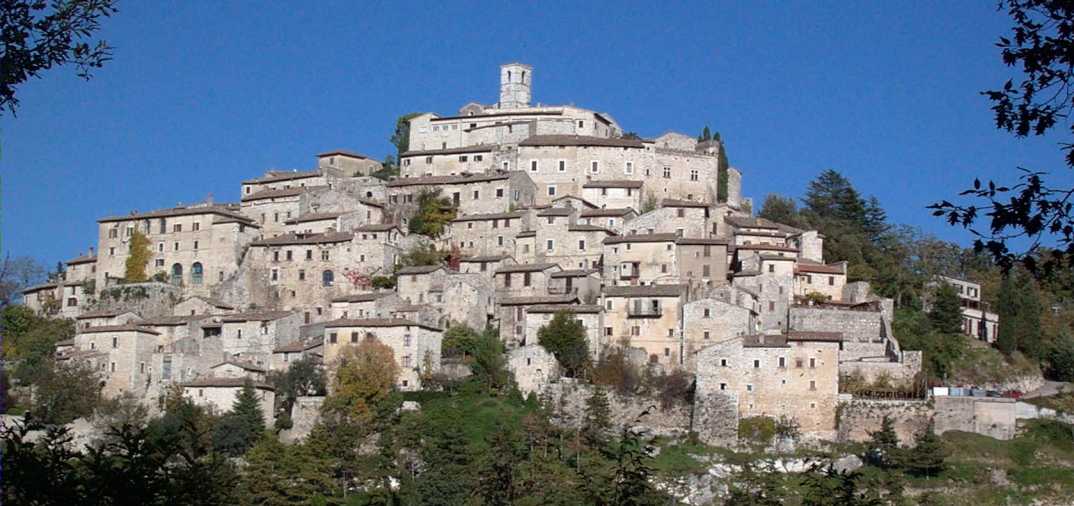
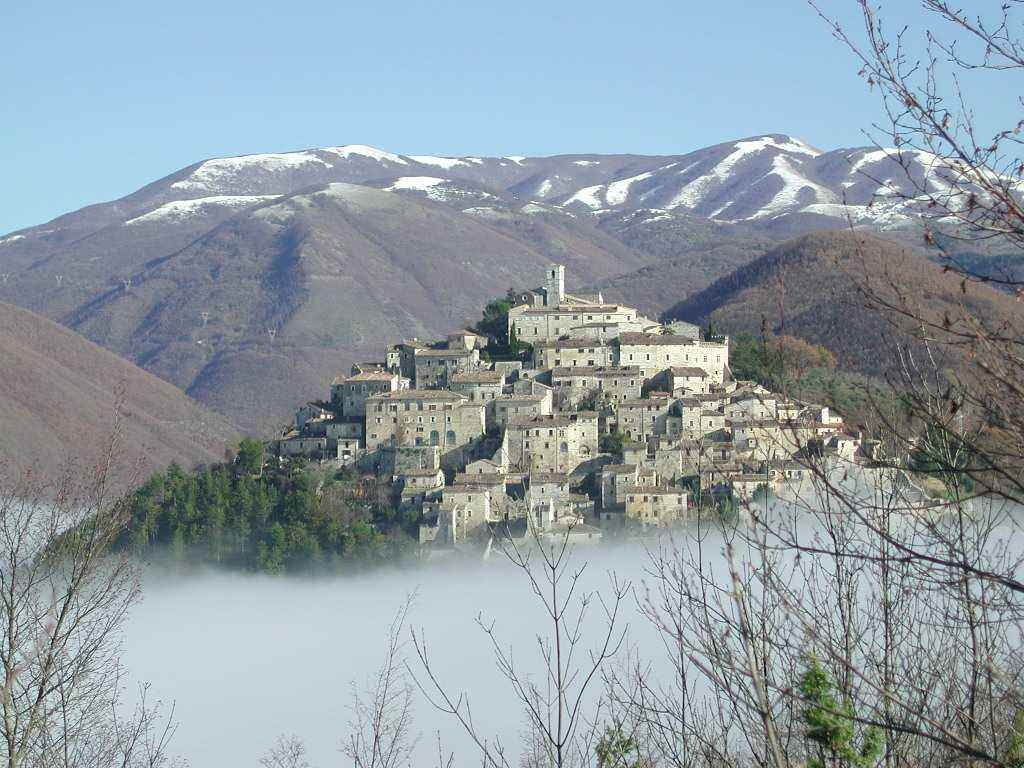
Labro rises on a hill positioned between the Fuscello valley and Lake Piediluco, with the Terminillo mountain chain rising behind the settlement. This position has shaped both the village's defensive history and its long-standing appeal as a scenic hilltop location.
The surrounding landscape, from valley floor to mountain backdrop, remains closely tied to how Labro's history and layout are understood today.
The Castello Nobili Vitelleschi
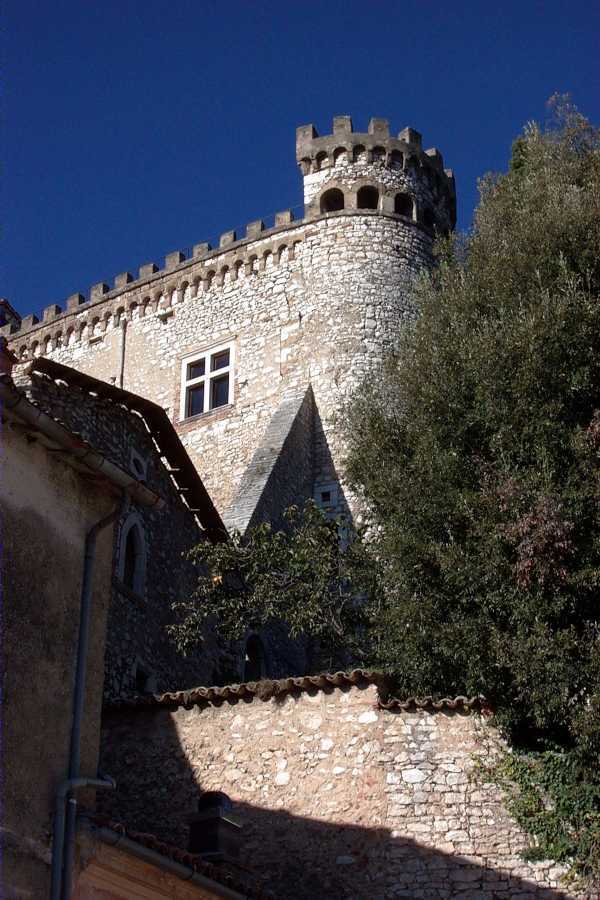
Among Labro's architectural treasures, the Castello Nobili Vitelleschi stands as the village's fortified palace, referenced across the site as a defining monument of its medieval character. It is closely associated with the noble families whose name it carries.
Explore more about the castle and the surrounding historic centre below.
Continuing the Story
Labro's art and history are woven through its stone streets, restored buildings, and the wider territory that surrounds it. The Territory page places the village within its broader landscape of hamlets and medieval itineraries, while the Historic Centre page details the restoration work that shaped the village as it stands today.